Herpes outbreaks – What to do?
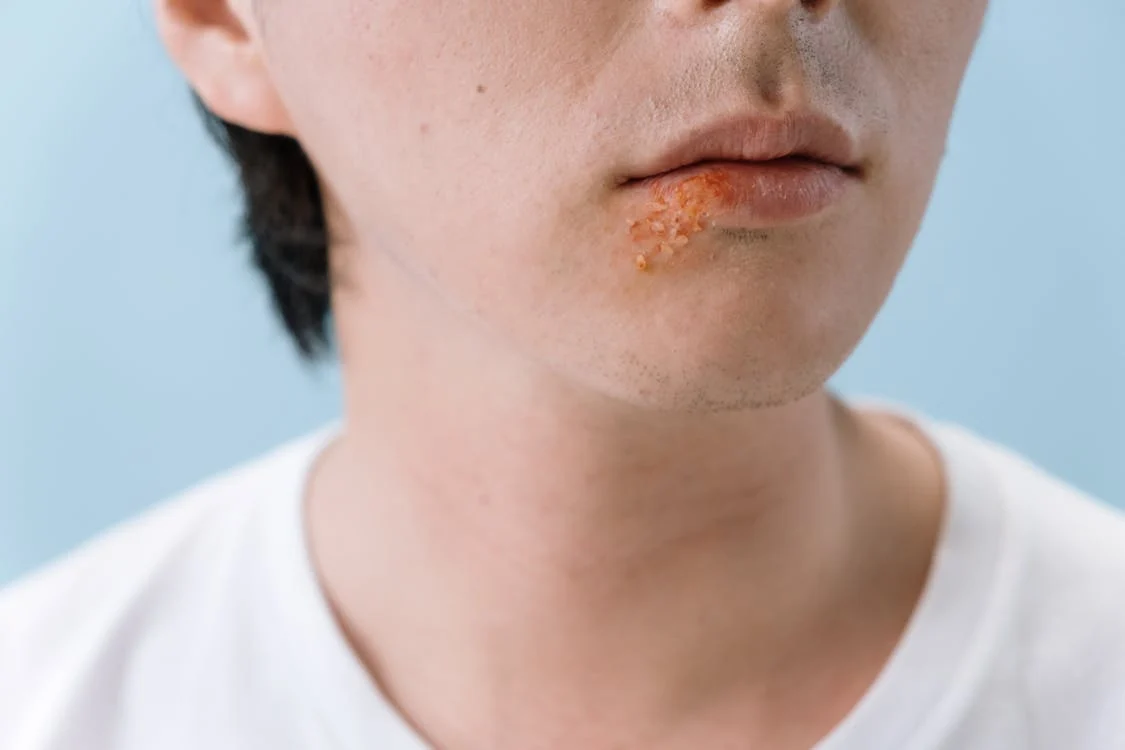
What are herpes attacks?
Herpes is a common STI caused by the herpes simplex virus (HSV). There are two types: HSV-1, which usually causes cold sores, and HSV-2, which mainly causes genital herpes. Herpes remains in the body after the initial infection and may occasionally flare up in the form of attacks. These attacks can be painful and are often a source of concern for people who have herpes.
Symptoms of a herpes attack
During a herpes attack, painful blisters and sores may develop around the mouth, genitals or anus. These spots may feel burning or itchy and are sometimes accompanied by fever, muscle aches and general malaise. The vesicles may open over time, followed by scabs that eventually heal. An attack usually lasts one to two weeks.
Some people experience multiple attacks per year, while others barely experience recurrent symptoms. Factors such as stress, fatigue, menstruation or a weakened immune system can trigger attacks.
What can you do during a herpes attack?
During an attack, it is important to keep the affected area clean and dry. Avoid touching the blisters to avoid spreading the virus to other parts of your body. Always wash your hands thoroughly after contact with the infected area. You can also use over-the-counter creams to reduce pain and itching. Consult your doctor for advice on appropriate remedies.
Antiviral medications such as aciclovir or valaciclovir can help shorten an attack and relieve symptoms. These medications suppress the virus and can also be used preventively if you have frequent attacks.
How can you prevent future attacks?
Although herpes cannot be completely cured, you can take measures to reduce the number of attacks. A healthy lifestyle helps, so get enough sleep, avoid excessive stress, and eat healthy to boost your immune system. For some people, it helps to avoid triggers such as certain foods or extreme sun exposure.
If you suffer from frequent herpes attacks, you can discuss with your doctor whether a maintenance dose of antiviral medications is appropriate for you. These medications lower the risk of attacks and may also reduce the chance of transmission to your partner.
Discuss it with your partner
Herpes can be a touchy subject, but it is important to be honest with your partner(s) about your infection. Genital herpes is contagious, especially during an attack, but can also be transmitted if there is no visible
Choose your STD test at
OneDayClinic
Starting at €225
STI rapid test, results after 90 minutes
Always includes consultation with a doctor or nurse
Amsterdam South, Amsterdam Center, Utrecht, Eindhoven, The Hague, Rotterdam
Starting at $115
STD test, results after 1-3 business days
Choose from:
- chlamydia + gonorrhea (choice of: vagina/urine/throat/anus)
- HIV + syphilis + hepatitis B&C
- mycoplasma/
trichomonas
Always includes consultation with a doctor or nurse
Amsterdam South, Amsterdam Center, Utrecht, Nijmegen, Eindhoven, The Hague, Rotterdam